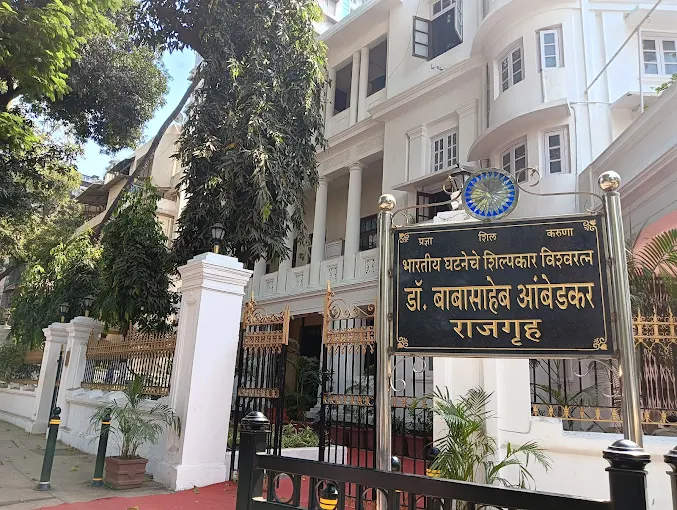
What Rajgruha means in Ambedkar's life
Rajgruha matters because it is tied to Ambedkar's working life in a direct and unusually intimate way. Unlike a birthplace, a memorial, or a site of mass conversion, Rajgruha is associated with the long daily discipline through which thought was formed. It keeps alive the part of Babasaheb's example that can easily be admired in the abstract but forgotten in practice: the life of deep reading, sustained preparation, and intellectual seriousness.
That gives Rajgruha a different kind of power. A public event can be remembered through scale. A home of study is remembered through concentration. Rajgruha helps visitors understand that Ambedkar's public force did not appear suddenly in speeches or legal documents. It was made over years of reading, writing, reflection, and sustained mental labor. In that sense, the place preserves not only memory, but method.
A home like Rajgruha matters for Ambedkarites because it makes knowledge visible as a lived habit. It says that study is not separate from justice. Reading is not separate from movement. Books, notes, thought, and argument are part of dignity too.
Location and overview
Rajgruha is located in Dadar, Mumbai, one of the cities most deeply tied to Ambedkar's public and intellectual life. That matters because Mumbai was not only a backdrop to his work. It was one of the places where he read, wrote, organized, argued, and shaped the direction of modern anti-caste politics and social thought. Rajgruha belongs to that larger city memory.
The place is therefore more than a preserved residence. It is one of the points through which Mumbai itself is read in Ambedkarite history. Visitors often understand Rajgruha alongside Chaityabhoomi as another major Mumbai site, but the meaning is different. Chaityabhoomi gathers remembrance. Rajgruha gathers concentration. One is public mourning and continuity. The other is preparation and intellectual labor.
The historical background of Rajgruha
Rajgruha is historically important because it is linked to Ambedkar's life not through one dramatic public act, but through the everyday conditions that made public work possible. That kind of history can seem quieter at first, but it is often the more revealing history. It shows what kind of discipline lay behind the writing, speeches, legal thinking, and organizational work that later shaped public life in India.
Ambedkar's life cannot be understood only through landmark events. It also has to be understood through the places where he prepared, studied, and thought. Rajgruha helps preserve that dimension. It reminds visitors that the sharpness of Ambedkar's argument, the range of his knowledge, and the force of his public interventions were tied to a life built around books, reading, comparison, and reflection.
This is one reason Rajgruha matters so much in the Ambedkarite map. It protects the continuity between scholarship and struggle. It prevents Babasaheb from being remembered only as a public icon and restores him as a person whose intellectual labor was inseparable from his political and moral labor.
That is also why Rajgruha belongs in sequence with Mhow, Yeola, Deekshabhoomi, and Chaityabhoomi. Each place marks a different stage. Rajgruha marks the long middle work of study and preparation through which a life of public consequence was sustained.
Why Rajgruha is important for Ambedkarites
Rajgruha matters for Ambedkarites because it preserves one of the deepest values in the movement: respect for knowledge. Ambedkarite communities have long valued books, libraries, examinations, reading circles, study habits, and intellectual self-respect. Rajgruha becomes a natural symbol of that inheritance. It says that liberation does not rest only on protest or emotion. It also rests on thought.
That has educational force. Many visitors experience Rajgruha not only with reverence, but with a kind of challenge. The place asks what it means to study seriously in Babasaheb's name. It asks whether people are willing to treat reading and disciplined thinking as part of movement life, not as optional extras. In that sense, Rajgruha continues to teach long after the visitor leaves.
The place also matters because it keeps Ambedkar's life from being remembered only in heroic outline. Rajgruha restores the patient routines behind the public figure. It narrows the distance between Babasaheb's greatness and the ordinary daily discipline that made that greatness possible.
Visiting Rajgruha today
People visit Rajgruha as a place of study, memory, and historical grounding. The site often works best when approached with prior reading already in mind. If a visitor has already spent time with Ambedkar's books, with his biography, or with pages such as The Buddha and His Dhamma, then Rajgruha feels fuller. The house becomes easier to read as a space of preparation rather than as a static memorial.
Rajgruha can feel especially powerful because it offers seriousness without spectacle. That is part of its value. In a movement life where symbols can easily become thin or merely ceremonial, Rajgruha calls people back to books, thought, and the discipline of understanding. It reminds visitors that Ambedkarite dignity is intellectual as well as social and political.
For many people, the place also brings a sense of proximity to Babasaheb that is different from a large memorial site. It is one thing to remember a great leader in public gathering. It is another to stand in a place tied to his reading life and sense the quiet labor behind everything that later became public history. Rajgruha gives that second kind of closeness.
How to reach
Rajgruha can be reached fairly easily from major Mumbai entry points, especially Dadar station and the wider central city network. For many visitors, this practical accessibility matters because Rajgruha is often visited as part of a larger Ambedkarite reading of Mumbai rather than as a separate long-distance trip.
The table below gives a simple planning view. Distances and fares are approximate and can change with traffic and service type, but they help as a starting point.
| Starting point | Approx. distance | Approx. time | Approx. taxi fare |
|---|---|---|---|
| Chhatrapati Shivaji Maharaj International Airport | 11-13 km | 25-40 min | Rs. 220-300 |
| Dadar Railway Station | 1-2 km | 5-12 min | Rs. 40-100 |
| Shivaji Park / Dadar West side | 2-3 km | 8-15 min | Rs. 60-120 |
The ease of reaching Rajgruha matters because the place continues to function as a real educational point in Ambedkarite memory, not just as a symbolic marker on a distant map.
When Rajgruha is easiest to read
Rajgruha can be meaningful throughout the year, but it often becomes especially resonant around days of wider Ambedkarite remembrance, including 14 April Ambedkar Jayanti. At the same time, quieter visits outside major public dates can make the place easier to read in its own register. Rajgruha is often best understood slowly.
The better time depends on what kind of experience you want. A major remembrance period connects the site to public feeling. A quieter day makes its intellectual atmosphere easier to absorb.
How to approach a first visit
A first visit to Rajgruha may not feel dramatic in the way a mass gathering site feels dramatic. That is normal. Rajgruha's force is quieter and more concentrated. It works best when a visitor already understands that the place stands for disciplined study, writing, and preparation rather than a single spectacular event.
For that reason, Rajgruha is often richer when visited with chronology in mind. Mhow marks the beginning of Ambedkar's life. Rajgruha marks the long interior labor of knowledge and preparation. Deekshabhoomi marks the public Buddhist turn. Chaityabhoomi marks public remembrance and continuity. Seeing Rajgruha in that larger map helps its meaning settle more clearly.
What stays with visitors at Rajgruha
At Rajgruha, visitors often experience a seriousness shaped by books, memory, and inward concentration rather than crowd or spectacle. The place can bring respect, gratitude, and a sharper sense of what intellectual labor looks like when it is joined to public purpose. For many people, that is exactly what makes Rajgruha powerful.
The experience can also change how Ambedkar is remembered. Instead of seeing only the public leader, visitors can begin to feel the scholar, the reader, the writer, and the patient worker behind the public figure. That shift matters because it makes Ambedkar's example more concrete. It brings greatness back into the reach of discipline.
Why Rajgruha still asks something of visitors
Every Ambedkarite should visit Rajgruha at least once if possible because the place makes one part of Babasaheb's life unusually clear: the moral importance of study. A movement becomes weaker when it remembers only slogans, anniversaries, or emotional attachment. Rajgruha helps keep alive the more demanding side of Ambedkarite life: reading deeply, thinking clearly, and treating knowledge as part of dignity.
That is why Rajgruha matters beyond sentiment. It does not only honor Babasaheb. It asks something of the visitor. It asks whether one is willing to take study seriously enough to let it shape character, judgment, and public conduct. That question gives the place its continuing relevance.
Related places
After Rajgruha, continue to Mhow for the beginning of Ambedkar's life, or to Chaityabhoomi for Mumbai's central place of remembrance. To widen the reading further, return to the full places hub or continue to Who Was B.R. Ambedkar.
Conclusion
Rajgruha is not only a residence connected with Babasaheb Ambedkar. It is one of the clearest places through which his intellectual life remains visible. It keeps close the study, reading, writing, and discipline that underlay so much of his public work. That is why Rajgruha remains central in Ambedkarite memory. It preserves the house of thought behind the life of action.
Why is Rajgruha important?
Rajgruha is important because it is the home most closely associated with Dr. B.R. Ambedkar's reading, writing, study, and disciplined intellectual life in Mumbai.
Where is Rajgruha located?
Rajgruha is located in Dadar, Mumbai, and is one of the most important Ambedkar-related places in the city.
What is the connection between Rajgruha and Babasaheb Ambedkar?
Rajgruha was Dr. B.R. Ambedkar's home and is deeply tied to his life of reading, study, writing, and public preparation.
Can people visit Rajgruha throughout the year?
Yes. Rajgruha can be approached throughout the year, and it often becomes more meaningful when read alongside Ambedkar's writings and life story.
How is Rajgruha different from Mhow, Deekshabhoomi, or Chaityabhoomi?
Mhow marks Ambedkar's birth, Deekshabhoomi marks the public conversion to Buddhism, and Chaityabhoomi marks remembrance after his death. Rajgruha is different because it preserves the discipline of his study, writing, and intellectual labor.