Meaning of Deekshabhoomi
The name Deekshabhoomi is direct and powerful. “Deeksha” refers to initiation or acceptance into a new religious and moral path. “Bhoomi” means ground or place. Together, the name means the ground of initiation. In the context of Ambedkarite Buddhism, that meaning is exact. This is the ground where Ambedkar and his followers accepted a new life under Buddhism in public view.
The name matters because it tells us how the place should be read. Deekshabhoomi is not only a memorial made later in honor of Ambedkar. It is tied to an event of entry. It points to commitment, direction, and public change. In that sense, the name itself carries the core meaning of the site.
Location and overview
Deekshabhoomi is located in Nagpur, Maharashtra, a city that sits in central India and holds deep importance in Ambedkarite public memory. Nagpur mattered to Ambedkar for historical and social reasons, and it gave this event a central national location rather than the feel of a distant regional act. Choosing Nagpur helped the conversion speak to a much wider public.
The place is now known across India and beyond India as one of the central sites of Ambedkarite Buddhism. It brings together memory, pilgrimage, reading, community, and public identity. People do not come only to see architecture. They come to connect themselves with a turning point in modern Buddhist and anti-caste history.
The conversion of 1956
On 14 October 1956, Dr. B.R. Ambedkar embraced Buddhism at Deekshabhoomi and led a mass conversion that remains one of the most important public religious events in modern India. The event was historic not only because of the number of people gathered, but because of what the act meant. It was a decisive break from caste-bound religion and a public turn toward an ethical, rational, and egalitarian path.
That day made clear that Ambedkar's turn to Buddhism was not private. It was collective, moral, and social. He accepted refuge in the Buddha, Dhamma, and Sangha, and the people with him took that same path into their own lives. Deekshabhoomi therefore remains the exact place where a new beginning in Ambedkarite Buddhism became visible to the world.
The scale of the event also matters. Large numbers of people had come not merely to witness a leader making a personal decision, but to take part in a shared change of life. That is why the atmosphere of the day is remembered with such force. It was not only ceremonial. It carried relief, resolve, and seriousness. For many, it was the first time religion, dignity, and social equality appeared together in one public act without contradiction.
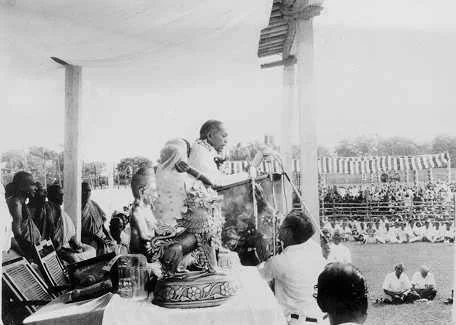
The conversion was also important because it did not remain at the level of declaration alone. Ambedkar made the meaning of the event clear through the form of the ceremony itself. Taking refuge in the Buddha, Dhamma, and Sangha gave the conversion a recognizable Buddhist foundation, while the public character of the event made clear that this was also a social reorientation. A people long placed outside dignity were entering a moral path in their own name and with open self-respect.
This is one reason 14 October 1956 remains more than a date in movement memory. It marks the point where Ambedkar's long criticism of caste and his long search for a just moral basis for life finally met in one public action. Yeola had marked the declaration that he would not die a Hindu. Deekshabhoomi marked the positive step that followed: a deliberate entrance into Buddhism as a way of life. That is why the conversion continues to be read not just as a religious event, but as a turning point in modern Indian social history.
The 22 Vows at Deekshabhoomi
At Deekshabhoomi, Ambedkar also gave the 22 Vows. These vows matter because they turned conversion into practice. They were not decorative words. They made clear what had to be rejected and what kind of life had to be built in its place. In Ambedkarite Buddhism, the site cannot be understood fully without remembering the vows, because they gave ethical content to the conversion itself.
Why Ambedkar chose Buddhism
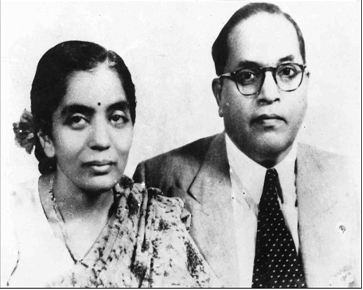
Deekshabhoomi cannot be understood apart from Ambedkar's larger reasons for choosing Buddhism. He had long rejected the caste system as morally unacceptable and believed that social equality required a deeper change in the basis of life. Buddhism offered him a path centered on morality, reason, compassion, conduct, and human dignity rather than hierarchy and inherited pollution.
This is why Deekshabhoomi matters so deeply. The conversion there was not an escape into vague spirituality. It was a deliberate turn toward a path Ambedkar believed could support justice, self-respect, and a more truthful moral life. For a fuller reading of this decision, it helps to continue to why Ambedkar chose Buddhism, what Navayana Buddhism means, and the Bodhivriksha Tree, which keeps close the older Buddhist memory of awakening at Bodh Gaya.
A symbol of liberation
For Ambedkarites, Deekshabhoomi is a symbol of liberation because it marks a public refusal to remain inside a system built on caste humiliation. The place says that oppression can be rejected in organized moral terms and that a people can enter a different way of life together. That is why Deekshabhoomi carries such emotional force. It stands for dignity made public.
It is also one of the clearest places from which modern Ambedkarite Buddhism can be read. The site shows that conversion was not about changing a label alone. It was about beginning a different ethical and social life. In that sense, Deekshabhoomi is not just historical memory. It is movement memory.
A living pilgrimage site
Deekshabhoomi remains a living pilgrimage site because people continue to come there not only to remember what happened in 1956, but to connect their own present life to that decision. The site remains active in the moral imagination of Ambedkarite Buddhists. It is a place where history and current identity still meet.
That living quality matters. A site can become dead if it is treated only as a photograph or a chapter in a book. Deekshabhoomi has not become dead. It continues to gather people through reading, prayer, discussion, public events, and the wish to stand near the place where Ambedkar's Buddhist turn became collective.
The Great Stupa
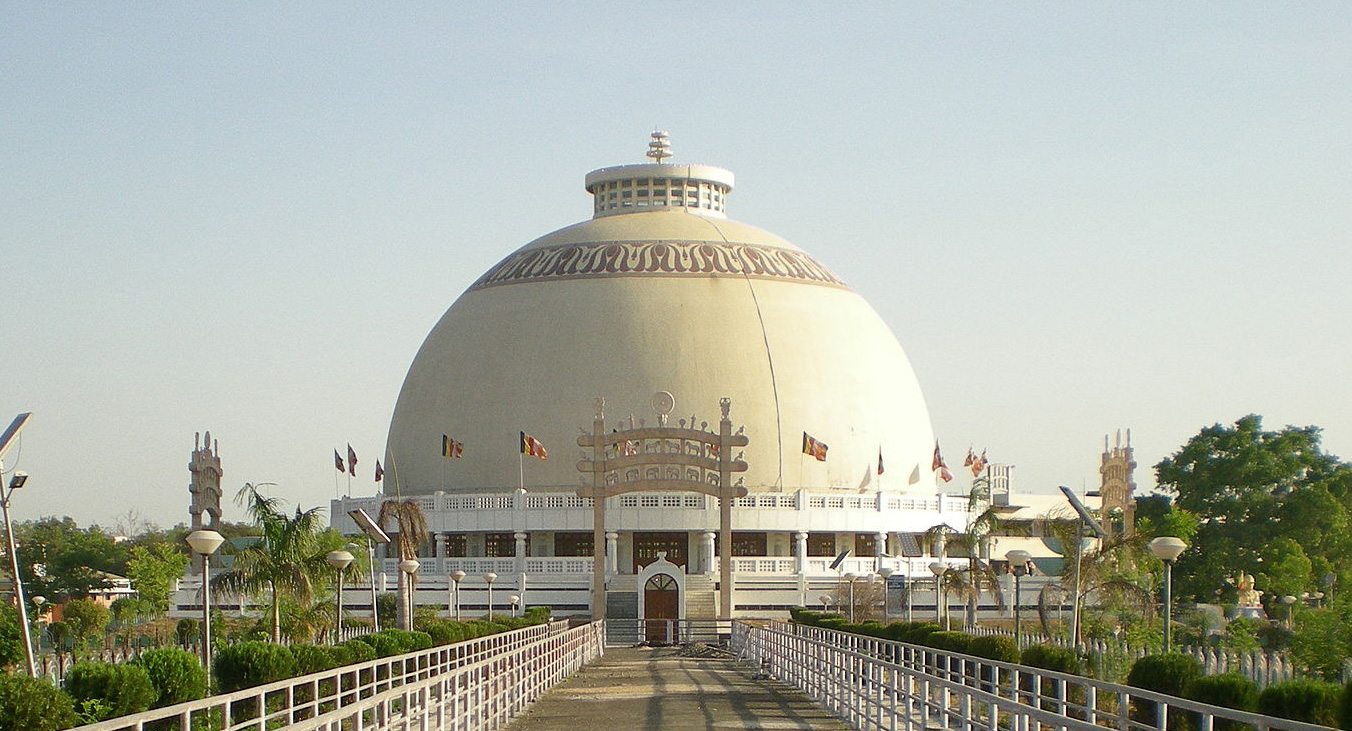
The great white stupa at Deekshabhoomi gives the place much of its visible identity. Its form evokes older Buddhist architectural memory, including associations with Sanchi, while still functioning as a modern Ambedkarite Buddhist landmark. The whiteness of the dome, the scale of the structure, and the calm shape of the monument give the site a sense of solemnity without making it feel distant.
The architecture matters because Deekshabhoomi is not merely a plaque on a historic ground. It is a place shaped so that remembrance, gathering, and inward reflection can happen together. The stupa allows the site to speak both as memorial and as living Buddhist space.
Inside the stupa
Inside the stupa, visitors encounter a different pace from the public movement outside. The Buddha image, the interior calm, and the meditative atmosphere help turn the visit inward for a time. This matters because Deekshabhoomi is not only about collective public history. It is also about the inner seriousness of Dhamma.
The inside of the stupa gives people room to pause. For many visitors, that change of pace is important. The large public meaning of the place can be felt more personally when one sits, observes silence, and reflects on what the conversion at this site still asks of a life.
Dhammachakra Pravartan Din
Each year, Deekshabhoomi becomes one of the major centers of remembrance during Dhammachakra Pravartan Din. Huge numbers of people gather to honor the 14 October 1956 conversion, renew connection with Ambedkar's Buddhist path, and take part in a public culture of reading, listening, learning, and community presence. The site then becomes one of the clearest living expressions of Ambedkarite Buddhism in public life.
This annual gathering keeps the place from becoming static. It reminds people that Deekshabhoomi is still part of an ongoing movement. The scale of the gathering matters, but what matters more is what brings people there: the wish to remain connected to the moral and historical meaning of that conversion.
Ambedkar Jayanti and public remembrance
Deekshabhoomi also matters during periods of wider Ambedkarite remembrance such as 14 April Ambedkar Jayanti. Even though the place is most directly tied to the conversion of 1956, it remains one of the major sites through which people understand Ambedkar as a whole. His life, his anti-caste struggle, his Buddhist turn, and his continuing public meaning can all be felt there together.
How to reach
Deekshabhoomi is in Nagpur and can be reached fairly easily from the airport, railway station, and the central part of the city. For many visitors, this matters in a very practical way. The site is not distant from the city's main entry points, so a visit can often be planned without much difficulty even on a short stay.
The table below gives a simple planning view. Distances and taxi fares are approximate and can change with traffic, demand, time of day, and the service you use, but they are useful as a starting point.
| Starting point | Approx. distance | Approx. time | Approx. taxi fare |
|---|---|---|---|
| Dr. Babasaheb Ambedkar International Airport | 6.9 km | 8-10 min | Rs. 420-500 |
| Nagpur Junction Railway Station | 4.7 km | 5-10 min | Rs. 390-470 |
| Central Nagpur (Zero Mile / Sitabuldi side) | 3.4-5 km | 3-15 min | Rs. 370-450 |
The practical ease of reaching Deekshabhoomi matters because the site is not meant to remain remote in public memory. It is one of the places through which Ambedkarite Buddhism remains open and reachable in a very literal sense.
When Deekshabhoomi feels most alive
October is the most significant time to visit if you want to experience Deekshabhoomi at its largest public intensity, especially around Dhammachakra Pravartan Din. That is when the movement dimension of the site is felt most strongly. At the same time, quieter visits through the rest of the year offer a different experience. They allow more space for reflection, study, and calm attention.
The right time depends on what kind of reading of the place you want. A major gathering shows Deekshabhoomi as collective movement. A quieter visit shows it as reflective Buddhist and Ambedkarite space.
Entry, timings and guidelines
Visitors should approach Deekshabhoomi with the same seriousness they would bring to any place of remembrance and religious importance. Silence inside the stupa, care for cleanliness, and respect for the wider public space matter. This is not only a tourist destination. It remains a place of devotion, reflection, and movement memory.
Specific timings can change, so it is best to confirm locally before planning a detailed visit. But the deeper guideline is constant: come with attention and respect, not just curiosity.
What stays with visitors at Deekshabhoomi
At Deekshabhoomi, visitors often experience two things at once. One is spiritual quiet: the sense of entering a place shaped by reflection, Dhamma, and reverence. The other is cultural and intellectual life: books, public memory, teachings, speeches, and the feeling of being inside a continuing community. These two sides belong together there.
That combination is one reason the place remains so strong. It does not reduce Buddhism to ritual alone, and it does not reduce Ambedkarite memory to politics alone. It keeps morality, thought, and movement in one shared space.
Why Deekshabhoomi remains a necessary visit
Every Ambedkarite should visit Deekshabhoomi at least once if possible because the place makes the meaning of Ambedkar's Buddhist turn easier to understand in a direct way. Reading helps. Study matters. But some truths become clearer when one stands on the ground where they were publicly chosen. Deekshabhoomi gives that kind of clarity.
The visit is not important as a ritual obligation. It is important because it helps connect history, identity, Dhamma, and responsibility. It can deepen the meaning of how to practice Ambedkarite Buddhism and make the path feel less abstract and more lived.
Related places
From Deekshabhoomi, continue to Chaityabhoomi to understand another major site of Ambedkarite remembrance, or to Mhow to begin from the birthplace of Babasaheb. To continue the wider reading, go back to the full places hub.
Conclusion
Deekshabhoomi is not just a monument in Nagpur. It is one of the clearest places where Ambedkar's moral and historical vision became public action. It remains central because it gathers conversion, equality, Dhamma, memory, and community into one ground. To visit Deekshabhoomi is not only to remember what happened there. It is to ask what it still asks of those who stand there now.