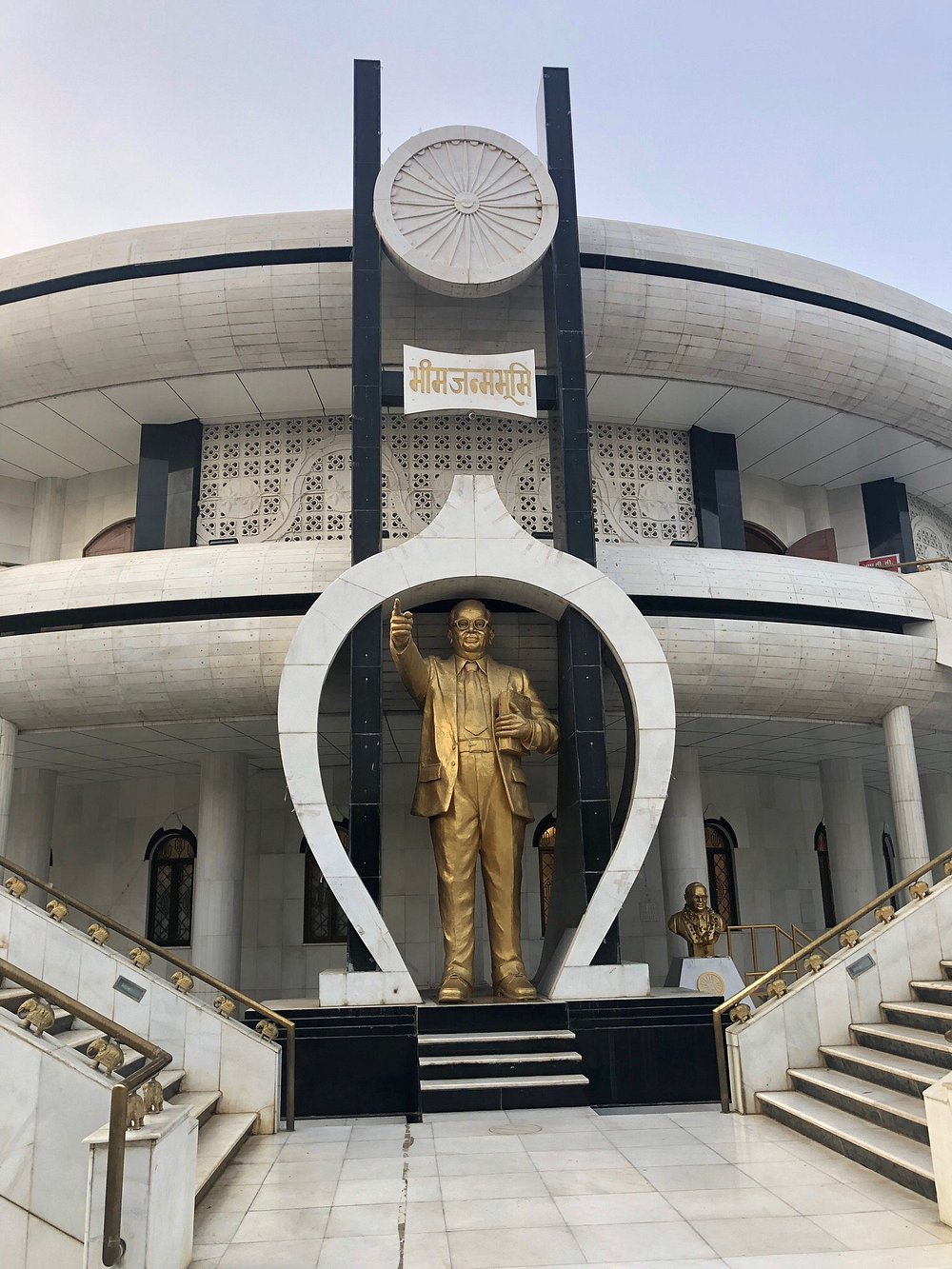
What Mhow means in Ambedkar's life
Mhow is important first because of biography. Dr. B.R. Ambedkar was born here on 14 April 1891. That fact alone gives the place lasting meaning. But Mhow matters for more than a date. It matters because a birthplace reminds people that a great life did not begin at the level of fame or authority. It began in the ordinary human way, in a family, in a place, and within the conditions of a deeply unequal society.
That is why Mhow has a different force from the other major Ambedkarite places. Deekshabhoomi is associated with the public conversion to Buddhism. Chaityabhoomi is associated with public remembrance after Ambedkar's death. Mhow belongs to the beginning. It returns the story to the point before recognition, before leadership, and before national visibility. In that sense, it asks visitors to remember Babasaheb not only as a figure of history, but as a human being whose life had to be made through struggle.
A birthplace matters in a special way because it carries possibility rather than completion. Nothing has yet been achieved there in the public sense, and yet everything that will later matter begins from that point. For Ambedkar's life, this is especially important. The later achievements were so large that they can make people forget the vulnerability of the beginning. Mhow brings that beginning back into view and makes the later life feel earned rather than mythic.
Location and overview
Mhow is in Madhya Pradesh and is now officially known as Dr. Ambedkar Nagar. It lies near Indore and can be approached as both a memorial place and a biographical site. For readers of Ambedkar's life, the location matters because it anchors the story geographically. It tells us that Ambedkar's life did not emerge from abstraction. It began in a specific military town setting in central India and from there moved outward into schooling, exclusion, study, law, politics, writing, and religion.
The place is often understood today through Ambedkarite remembrance rather than through the older military identity of the town alone. That shift is itself meaningful. It shows how a site can be re-read through the life of a person whose thought and action gave the place a wider moral and historical visibility.
The historical background of Mhow
Mhow is not remembered because a major public event happened there later in life. It is remembered because it marks the beginning of a life whose later public consequences were enormous. That gives the place a special kind of quiet seriousness. The significance does not come from spectacle. It comes from the knowledge that the child born here would later become Babasaheb Ambedkar.
This matters especially in Ambedkarite memory because Ambedkar's later stature can sometimes flatten the human scale of his life. People can begin to remember only the Constitution, only the speeches, only the public battles, or only the conversion to Buddhism. Mhow resists that flattening. It says that all of those later achievements belonged to a life that began under real social conditions and had to rise through discipline, study, and exceptional courage.
The place therefore helps hold together biography and history. It shows that the making of Ambedkar cannot be separated from the historical order he confronted. When Ambedkarites visit Mhow, they are not only visiting a birthplace in the sentimental sense. They are visiting the point from which one of the sharpest modern critiques of caste and inequality later emerged.
That is why the site belongs in the same larger map as Rajgruha, Yeola, Deekshabhoomi, and Chaityabhoomi. Each marks a different stage. Mhow marks the beginning that makes the rest of the map possible.
In Ambedkarite public memory, this kind of beginning matters because movements do not live only by remembering their most dramatic turning points. They also live by returning to origins and asking what conditions produced the need for struggle in the first place. Mhow helps people hold that question close. It points backward to the society Babasaheb was born into and forward to everything he later did to challenge that society.
Why Mhow is important for Ambedkarites
Mhow matters for Ambedkarites because public memory needs origins. A movement cannot live only by returning to its most dramatic moments. It also needs places that keep the human beginning visible. Mhow does that work. It helps preserve the truth that Babasaheb's life was made in time, under pressure, and against exclusion rather than appearing already complete.
That has moral force. A birthplace can remind people that greatness was not inherited ready-made. It was built through study, discipline, refusal of humiliation, and commitment to public justice. For young readers and first-time visitors especially, Mhow can make Ambedkar's life feel closer and more possible to understand. The place narrows the distance between the towering public figure and the actual life that grew into that figure.
Mhow also matters because Ambedkarite public memory is not only about grief or celebration. It is also about continuity. A birthplace helps create that continuity by returning a movement again and again to the beginning of the life it honors. It keeps gratitude from becoming vague. It gives gratitude a place.
That is one reason Mhow can matter even to people who have already read a great deal about Ambedkar. Reading gives knowledge, but places can rearrange memory. When someone stands in the birthplace, the life often begins to feel less like a sequence of famous achievements and more like a continuous human journey. That shift is not small. It can make study feel more serious and more connected to responsibility.
Visiting Mhow today
People visit Mhow as a place of remembrance, reflection, and historical grounding. Around 14 April Ambedkar Jayanti, the place carries a stronger public energy because the birth anniversary naturally sharpens attention to the site. At other times of the year, the experience can feel quieter and more biographical. That quieter mode has its own value. It allows visitors to think not only about the public icon, but about the beginning of Babasaheb's life itself.
The place often becomes more meaningful when it is approached with reading already in mind. If a visitor has already spent time with who Babasaheb was, with his books and writings, or with the larger Ambedkarite map, then Mhow feels less like a standalone monument and more like the first chapter of a much larger story.
For that reason, Mhow is often best visited in a mood of orientation rather than hurried tribute. It is a place that repays slowness. A visitor does not need spectacle there. What helps more is a willingness to think about what it means for a child born into a society structured by caste to later become one of the greatest modern critics of that structure. Mhow gives that question a place to settle.
How to reach
Mhow can generally be reached through Indore and the surrounding transport routes of Madhya Pradesh. For many visitors, the practical journey matters because Mhow is often visited alongside other Ambedkar-related study or remembrance travel in central India.
The table below gives a simple planning view. Distances and fares are approximate and can change with traffic, service type, and local conditions, but they help as a starting point.
| Starting point | Approx. distance | Approx. time | Approx. taxi fare |
|---|---|---|---|
| Indore Airport | 28-32 km | 45-65 min | Rs. 800-1200 |
| Indore Junction | 22-25 km | 40-60 min | Rs. 700-1100 |
| Mhow Railway Station | 1-3 km | 5-15 min | Rs. 50-150 |
The practical reach of the site matters because memory remains stronger when people can actually make the journey. Mhow is not a remote symbolic point only. It is a real place of return in Ambedkarite public life.
When Mhow feels most meaningful
The most significant time to visit Mhow is around 14 April, when Ambedkar Jayanti gives the birthplace its strongest public meaning. That is when the place is most visibly tied to collective remembrance of Babasaheb's life. At the same time, quieter visits outside the main observance days can make the biographical meaning of the site easier to absorb without crowd and ceremony.
The better time depends on what kind of reading of the place you want. A major day shows Mhow as living public memory. A quieter day shows it as the beginning of a life that can be followed with more inward attention.
How to approach a first visit
A first visit to Mhow may feel different from a first visit to Deekshabhoomi or Chaityabhoomi. It is less marked by one dramatic public act and more by biographical weight. That means the place often becomes richer when the visitor already knows something of Ambedkar's life. It helps to arrive with a sense of chronology: Mhow as beginning, Rajgruha as study and writing, Yeola as declaration, Deekshabhoomi as conversion, and Chaityabhoomi as remembrance.
That approach helps the place feel more grounded. Mhow is not large in meaning because of spectacle. It is large because it holds the first point of a life that later altered the moral and political language of India.
What stays with visitors at Mhow
At Mhow, visitors often experience a kind of seriousness that is quieter than other major Ambedkarite sites. The force of the place comes from proximity to origin. It can bring gratitude, reflection, and historical awareness together in a more subdued way. For some visitors that quieter quality is exactly what makes the place strong.
The experience also helps correct a common mistake in public memory: the tendency to remember only Ambedkar's height and not the long labor of becoming. Mhow helps keep that labor visible. It asks visitors to hold together the child, the student, the thinker, the lawmaker, the anti-caste leader, and the Buddhist turn without collapsing them into one flat image.
Why Mhow remains part of the journey
Every Ambedkarite should visit Mhow at least once if possible because the place makes the beginning of Babasaheb's life harder to forget. That matters ethically as well as emotionally. A movement becomes healthier when it remembers not only triumph and doctrine, but also origin, effort, and the conditions out of which its leading figure emerged.
Mhow is therefore not important as a sentimental stop. It is important because it helps put Ambedkar's life back into sequence. It keeps the later greatness connected to the human beginning. That makes the rest of the Ambedkarite map clearer.
Related places
After Mhow, continue to Rajgruha to follow Ambedkar into study and writing, or to Deekshabhoomi to understand the place of conversion. To widen the reading further, return to the full places hub or continue to Who Was B.R. Ambedkar.
Conclusion
Mhow is not only a birthplace in the formal sense. It is one of the places through which Ambedkar's life remains human, near, and historically grounded. It reminds visitors that Babasaheb's later public force began in a real life, in a real place, under real conditions. That is why Mhow remains central in Ambedkarite memory. It keeps the beginning visible.
Questions about Mhow
Why is Mhow important?
Mhow is important because it is the birthplace of Dr. B.R. Ambedkar. For Ambedkarites, it marks the human beginning of a life that later transformed law, politics, anti-caste thought, and Buddhism in modern India.
Where is Mhow located?
Mhow, now officially Dr. Ambedkar Nagar, is located in Madhya Pradesh near Indore.
What is the connection between Mhow and Babasaheb Ambedkar?
Dr. B.R. Ambedkar was born in Mhow on 14 April 1891. That makes the place central in Ambedkarite remembrance and biography.
Can people visit Mhow throughout the year?
Yes. Mhow can be visited throughout the year, though the atmosphere is especially important around Ambedkar Jayanti on 14 April.
How is Mhow different from Deekshabhoomi or Chaityabhoomi?
Mhow marks the beginning of Ambedkar's life, while Deekshabhoomi is the place of conversion and Chaityabhoomi is one of the central places of public remembrance after his death.