What Yeola means in Ambedkar's life
Yeola matters because it marks a declaration rather than a completed conversion. That distinction is essential. Ambedkar did not enter Buddhism at Yeola, but he made something fundamental clear: the moral structure of Hindu caste society could not be accepted as the framework for his life or for the future of oppressed people. Yeola therefore stands as a place of public refusal and direction.
This gives the site unusual importance in movement history. Some places preserve the memory of action already completed. Yeola preserves the memory of a future made visible before the final path was formally entered. It is where Ambedkar told society, and told his own people, that the old religious order could no longer command moral loyalty.
That is why Yeola is not merely an introductory chapter before Deekshabhoomi. Without Yeola, the later conversion story can look sudden or symbolic. Yeola shows that Ambedkar's turn away from caste religion was deliberate, examined, and publicly announced long before 1956.
Location and overview
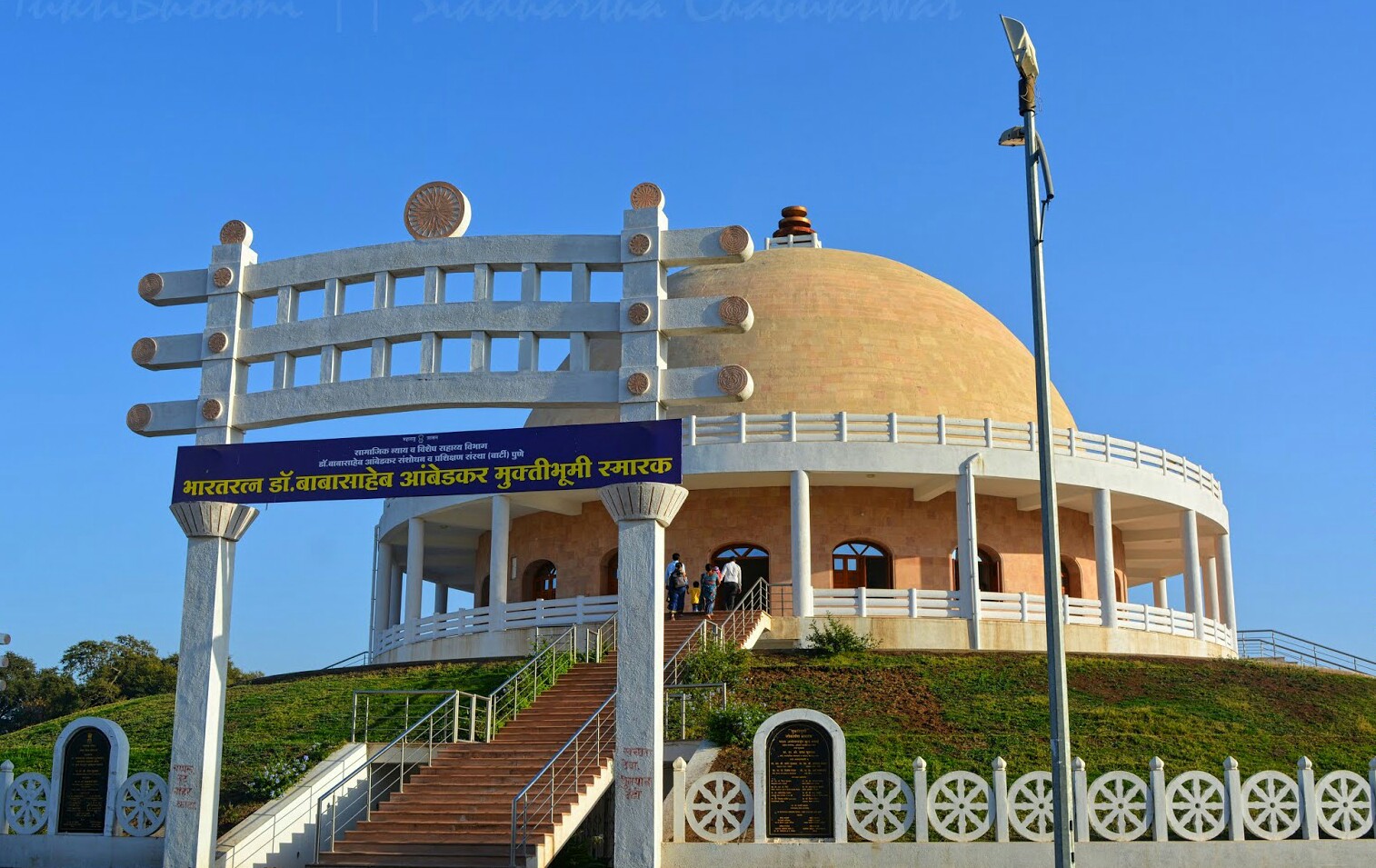
Yeola is in present-day Nashik district in Maharashtra. In Ambedkarite memory it is associated above all with the provincial conference of 13 October 1935 and with Mukti Bhoomi, the memorial space connected to that declaration. The place matters because it anchors one of the clearest turning points in Ambedkar's public life in real geography rather than leaving it as a quotation detached from place.
That grounding matters. Yeola shows that a moral break was not made in private reflection alone. It was made before a gathered public. The town therefore remains part of the living map of Ambedkarite history, not simply because something was said there, but because what was said changed the direction of the movement.
The historic conference of 13 October 1935
On October 13, 1935, Dr. Babasaheb Ambedkar addressed a historic provincial conference in Yeola. There he made the declaration that has remained one of the most remembered statements in modern anti-caste history: "I was born in Hinduism but I will not die as a Hindu." The power of the statement lay in both its moral clarity and its public setting. It did not leave room for polite uncertainty. It announced that continued submission to caste hierarchy could not be accepted as fate.
The background to this declaration was deep frustration with caste inequality and with the repeated failure of Hindu society to grant basic dignity to those it oppressed. Ambedkar was not responding to one isolated insult. He was responding to a whole social order. Yeola therefore became the place where dissatisfaction turned into a public declaration of exit.
The declaration also carried responsibility. Ambedkar did not present conversion as emotional escape or as a theatrical gesture. He urged Dalits to leave a religious system that denied equal rights and to seek a path that could sustain human dignity. That is one reason Yeola still matters so much. It joins refusal with moral seriousness.
This is also why Yeola belongs in sequence with Mahad and Deekshabhoomi. Mahad shows public struggle against civic humiliation. Yeola shows the declaration that the old religious framework could not be retained. Deekshabhoomi shows the later public entry into Buddhism.
Mukti Bhoomi and the memory of Yeola
Mukti Bhoomi in Yeola preserves the memory of this turning point. The memorial matters because it keeps the declaration tied to a place that people can still approach, study, and remember. It gives Yeola a continuing public life in Ambedkarite memory. What might otherwise survive only as a famous sentence remains anchored in movement geography.
The name Mukti Bhoomi carries its own seriousness. In the Ambedkarite context, liberation is not only private or spiritual. It also means release from a social order built on humiliation. Yeola therefore remains important not only for what Ambedkar said there, but for what the site continues to mean: the public beginning of a break from caste religion.
Why Yeola is important for Ambedkarites
Yeola matters for Ambedkarites because it gives a clear moral language to refusal. The site says that there are conditions a person or a people should not accept indefinitely. In Ambedkarite memory, this matters deeply. Yeola marks the point where Babasaheb publicly refused to let inherited humiliation define the terms of life forever.
The place is also important because it teaches patience and seriousness. The declaration at Yeola was not followed immediately by conversion. There was a long period of study, reflection, and comparison before the final public turn to Buddhism. For Ambedkarites, this is instructive. It shows that moral resolve and careful thought can belong together. Refusal was not rash. It was principled and examined.
Yeola therefore helps explain the path to Ambedkarite Buddhism. It is one of the clearest places where the later turn to Buddhism begins to appear as a necessary moral outcome rather than a sudden change of identity.
Visiting Yeola today
Today, Yeola is visited as a movement site of decision, memory, and historical orientation. The place often resonates strongly with visitors who want to understand not only what Ambedkar eventually did, but how he thought through change. It gives the Ambedkarite map one of its most important stages: the stage of public resolve.
For many readers, Yeola becomes more meaningful when read together with why Ambedkar chose Buddhism, Dhammachakra Pravartan Din, and Deekshabhoomi. Then the site takes its proper place in sequence. Yeola helps people understand that the later Buddhist turn rested on years of moral clarity, reflection, and search.
Visitors also often come to Yeola because the place still makes a difficult truth visible. Change begins when the unjust order is named clearly and refused openly. That lesson remains central in Ambedkarite public life.
How to reach
Yeola can generally be reached by road and rail through the Nashik region, and many visitors include it within a broader Ambedkarite reading of Maharashtra movement places. Practical access matters because Yeola is not approached only as a quotation from history. It remains a place people travel to in order to understand a turning point in thought and public life.
The table below gives a simple planning view. Distances and fares are approximate and can change with traffic and service type, but they help as a starting point.
| Starting point | Approx. distance | Approx. time | Approx. taxi fare |
|---|---|---|---|
| Yeola Railway Station | 2-5 km | 8-15 min | Rs. 80-180 |
| Nashik city side | 80-90 km | 1.75-2.5 hr | Rs. 2200-3200 |
| Aurangabad side | 95-105 km | 2-2.75 hr | Rs. 2500-3600 |
That reach matters because Yeola continues to function as a real place of study and remembrance for Ambedkarite readers, students, and community visitors.
When Yeola feels clearest
Yeola can be visited throughout the year, but the meaning of the visit often depends on what kind of experience a visitor wants. Some people prefer dates connected with remembrance, when the movement memory is felt more collectively. Others prefer quieter days, when it is easier to sit with the seriousness of the 1935 declaration and think about its place in Ambedkar's longer journey.
Both kinds of visit can be valuable. A larger public atmosphere helps visitors see Yeola as a living part of Ambedkarite memory. A quieter visit can make the moral clarity of the declaration easier to absorb.
How to approach a first visit
A first visit to Yeola becomes clearer when a visitor arrives with the right question in mind: what does it mean to say publicly that one cannot remain within a system that denies equal dignity? Yeola answers that question not through ritual grandeur but through historical seriousness. It is a place whose force lies in the public decision it represents.
It also helps to understand that Yeola is not the end of the story. It is the place where a future direction became public. For that reason, many first-time visitors find Yeola most meaningful when they read it alongside Mahad and Deekshabhoomi. Then the site becomes part of a full movement arc rather than an isolated declaration.
What stays with visitors at Yeola
At Yeola, visitors often experience a seriousness shaped by resolve rather than by spectacle. The place can feel quiet, but that quiet carries weight. It asks visitors to stay close to the moral meaning of Ambedkar's declaration and to the question of what kind of religious and social order is worthy of human dignity.
For many people, the experience of Yeola deepens respect for the long path between refusal and reconstruction. The site helps explain why the later conversion to Buddhism was not simply symbolic. It came after a clear public break and a sustained moral search.
Why Yeola still matters for Ambedkarites
Every Ambedkarite should visit Yeola at least once if possible because the place keeps alive one of the movement's clearest lessons: transformation begins when injustice is refused without ambiguity. Yeola preserves the moment when Babasaheb publicly told society that caste religion could no longer claim moral legitimacy over his life.
That is why the site matters beyond memory alone. It teaches courage, direction, and seriousness. It reminds visitors that the path to dignity often begins with the willingness to say that the old order cannot continue.
Related places
From Yeola, continue to Mahad to read an earlier stage of civic struggle, or to Deekshabhoomi to see the later public conversion to Buddhism. To widen the reading further, return to the full places hub or continue to Who Was B.R. Ambedkar.
Conclusion
Yeola remains one of the essential places of Ambedkarite history because it preserves the public declaration that changed the direction of the movement. It keeps alive the moment when Ambedkar made clear that caste religion could not remain the basis of a dignified life. That is why Yeola still matters. It marks the public beginning of the path that later led to Ambedkarite Buddhism.
FAQs
Why is Yeola important in Ambedkarite history?
Yeola is important because on 13 October 1935 Ambedkar publicly declared that although he was born a Hindu, he would not die a Hindu. That statement marked a decisive turning point in the path that later led to conversion to Buddhism.
What happened at Yeola on 13 October 1935?
At a historic provincial conference in Yeola, Ambedkar announced that he would not die a Hindu and urged oppressed people to consider leaving a religion that denied equal human dignity.
What is Mukti Bhoomi in Yeola?
Mukti Bhoomi is the memorial in Yeola associated with Ambedkar's 1935 declaration. It preserves the memory of the public break that later shaped Ambedkarite Buddhism.
How is Yeola different from Deekshabhoomi?
Yeola marks the public declaration that Ambedkar would leave Hinduism, while Deekshabhoomi marks the later public conversion to Buddhism in 1956.
Can people visit Yeola today?
Yes. Visitors go to Yeola to understand the moral and historical turning point represented by Ambedkar's declaration and the memory preserved at Mukti Bhoomi.