What Bodh Gaya means
Bodh Gaya is remembered above all as the place of awakening. That makes its tone different from Lumbini, Sarnath, or Kushinagar. Lumbini carries the beginning of the Buddha's life, Sarnath the beginning of public teaching, and Kushinagar the memory of mahaparinirvana. Bodh Gaya carries the decisive inner turning point. It is the place where the path became clear.
This matters because Buddhism does not place awakening outside human life. The meaning of Bodh Gaya is not that something magical happened in isolation from the world. Its meaning is that a human being confronted suffering, inquiry, discipline, and understanding with enough seriousness that a new moral and intellectual path came into view. That is why the place continues to draw people across traditions, countries, and generations.
Location and overview
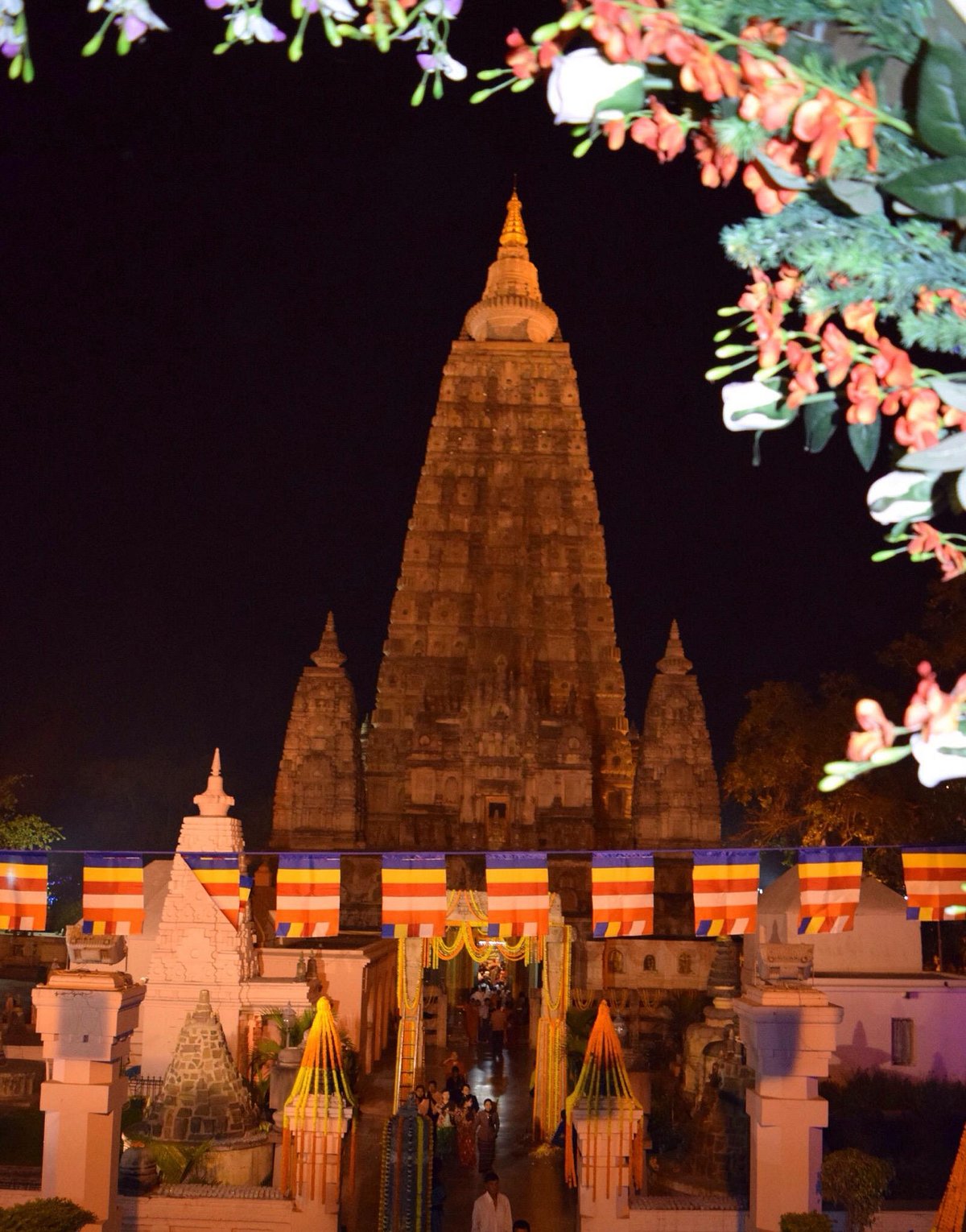
Bodh Gaya is in Bihar, near Gaya, and is centered around the Mahabodhi Temple Complex, one of the best-known Buddhist sites in the world. The place has long been treated as one of the main destinations in Buddhist pilgrimage because it is tied directly to the awakening of the Buddha. That directness matters. A visitor is not arriving at a place loosely linked to memory. They are arriving at one of the strongest anchors in Buddhist sacred geography.
The site today carries many layers at once. It is a place of prayer, meditation, scholarship, pilgrimage, architecture, international Buddhist presence, and public heritage. That layered life is part of what makes Bodh Gaya powerful. It does not feel like a site locked in the past. It feels like an ancient place still being used, read, protected, and argued over in the present.
The Mahabodhi Temple Complex and the Bodhi tree
The Mahabodhi Temple Complex gives Bodh Gaya much of its visible form, but for many visitors the emotional center of the place is the relation between the temple area and the Bodhi tree. The site does not feel important only because it is architecturally famous. It feels important because it holds together structure, memory, shade, stillness, and the idea that awakening happened in one real place and not only in a distant story.
This combination gives Bodh Gaya a very particular force. The complex feels formal, preserved, and internationally known, while the tree and the surrounding sacred area draw attention back toward a quieter and more human scale. Visitors often move between those two impressions: world heritage and inward seriousness. That movement is part of how the place works.
Historical background
Bodh Gaya became important because it was remembered as the place where Siddhartha Gautama attained awakening and became the Buddha. Over time, that memory drew pilgrimage, temple building, royal patronage, restoration, and international Buddhist attention. The place is therefore not important only because of one remembered event. It is also important because generation after generation treated that event as central enough to preserve the site and return to it.
The Mahabodhi Temple Complex itself reflects that long continuity. The site has connections to Emperor Ashoka and later architectural development, and it remains one of the strongest visible links between early Buddhist memory and present-day Buddhist devotion. This long historical life matters because it shows that Bodh Gaya was never just an isolated location in scripture. It became a lived site of return.
The place of the Buddha's awakening
The deepest meaning of Bodh Gaya comes from awakening itself. The site is read as the place where the Buddha reached a decisive understanding of suffering, its causes, its ending, and the path that leads beyond it. This makes Bodh Gaya more than a place of admiration. It is a place that asks what it means for a human life to become clear enough to stop moving under ignorance and craving.
That is why Bodh Gaya has always remained more than an architectural or archaeological site. The place matters because it keeps a question alive: what does awakening demand of an actual life? For many visitors, the seriousness of that question is what gives the site its force. It is not just about remembering that awakening happened once. It is about standing near the memory of that event and asking what it still means.
Why this place is important for Ambedkarites
For Ambedkarites, Bodh Gaya matters because Ambedkar's return to Buddhism was not a turn toward ritual distance or decorative reverence. It was a turn toward Dhamma as an ethical, rational, and socially serious path. In that frame, Bodh Gaya matters because it is the place most strongly associated with awakening itself. It helps Ambedkarite readers keep in view the older Buddhist source of the moral path Ambedkar chose to enter publicly in modern India.
The Ambedkarite connection is therefore not mainly biographical. It is interpretive. Bodh Gaya helps readers connect the older Buddhist world to modern Ambedkarite Buddhism by reminding them that the tradition Ambedkar returned to begins with inquiry, struggle, discipline, and transformed understanding. That matters because Ambedkarite Buddhism is not satisfied with identity alone. It asks what a changed moral life looks like in practice.
This is one reason Bodh Gaya belongs naturally beside Deekshabhoomi. Deekshabhoomi is the place where Ambedkar publicly entered Buddhism with his followers. Bodh Gaya is one of the places that helps explain what that entry was toward. One is part of modern movement history. The other is part of the older Buddhist path that gave that history meaning.
Why people keep returning to Bodh Gaya
Bodh Gaya remains a living pilgrimage site because people keep returning to it for more than one reason at once. Some come for prayer, meditation, and devotion. Some come because they want to stand close to one of the central places in Buddhist memory. Others come because the site helps them think more seriously about awakening, discipline, and what a changed life might demand. That mixture of motives is part of what makes the place feel alive rather than merely preserved.
The international quality of the site also matters. Monks, nuns, lay visitors, scholars, and travelers from many countries continue to gather there, and that makes Buddhism visible as a living world tradition rather than only a local inheritance. For an Ambedkarite visitor, this wider setting can be especially valuable. It places Ambedkarite Buddhism inside a larger Buddhist horizon while still leaving room for a distinctive reading of equality, morality, and social transformation.
How to reach
Bodh Gaya can be reached through Gaya and is relatively accessible from the airport, railway station, and nearby town area. This practical ease matters because many visitors arrive as part of a larger Buddhist circuit and need a simple sense of distance and travel time rather than a complicated route plan.
The table below gives a simple planning view. Distances and taxi fares are approximate and can change with traffic, demand, and service type, but they are useful as a basic guide.
| Starting point | Approx. distance | Approx. time | Approx. taxi fare |
|---|---|---|---|
| Gaya Airport | 8 km | 8-15 min | Rs. 220-270 |
| Gaya Junction Railway Station | 15-17 km | 25-40 min | Rs. 350-500 |
| Bodh Gaya town side | 1-3 km | 5-12 min | Rs. 40-120 |
The practical accessibility of Bodh Gaya is one reason it remains central in pilgrimage reading. A site of such importance still needs to be reachable enough for students, pilgrims, and ordinary visitors to return to it.
Reading Bodh Gaya well
Bodh Gaya is easiest to understand when it is not rushed. Some visitors prefer periods of larger Buddhist activity because the site feels more visibly international and alive with practice. Others prefer quieter periods because they allow more inward reflection and less crowd pressure. Both are valid. What matters more is giving the place enough time to become more than a stop on an itinerary.
Visitors should also approach the site with respect, patience, and awareness that it remains an active place of Buddhist devotion. Silence, order, and care for the surrounding sacred area matter. Bodh Gaya asks for more than quick tourism. It asks for enough seriousness that the idea of awakening can be felt as a moral question rather than only admired as a memory.
What you experience at Bodh Gaya
At Bodh Gaya, visitors often experience two scales at once. One is inward and quiet: sitting, observing, waiting, and letting the place ask its question about awakening. The other is broad and collective: a world Buddhist site where many traditions, robes, languages, and practices are visibly present. That double scale gives Bodh Gaya much of its special atmosphere.
For an Ambedkarite visitor, this can be especially valuable because it helps place Ambedkarite Buddhism within a broader Buddhist world without losing its distinct moral and social reading. The site can widen the mind while also making the question of awakening feel more immediate and less abstract.
Bodh Gaya in an Ambedkarite reading
For an Ambedkarite reader, Bodh Gaya becomes stronger when it is read not only as a famous sacred site, but as one of the places that clarifies what Ambedkar was returning to. It does not replace Deekshabhoomi, Chaityabhoomi, Mahad, or Yeola. Instead, it gives a deeper sense of the older Buddhist horizon within which Ambedkar's decision becomes more intelligible.
The value of Bodh Gaya is therefore not ritual prestige. It is clarity. A person who has stood there often understands more sharply that Ambedkar's return to Buddhism was directed toward a moral path with deep roots, not merely toward a symbolic change of label.
Related places
From Bodh Gaya, continue to Lumbini for the Buddha's birthplace, to Sarnath for the first sermon, or to Deekshabhoomi to see how Buddhism was publicly re-entered in modern Ambedkarite history. You can also return to the full places hub whenever needed.
If you want to stay within Bodh Gaya itself and look more closely at the main sacred structure, continue to Mahabodhi Temple. That page focuses on the temple complex, the Bodhi Tree area, architecture, and the site’s longer historical life. To focus more directly on the sacred tree of awakening, continue to the Bodhivriksha Tree.
Conclusion
Bodh Gaya is not only one sacred site among many. It is one of the clearest places where the meaning of awakening remains close to memory, pilgrimage, and moral reflection. For Buddhists it is a central place of return. For Ambedkarites it is one of the places that helps explain the older path to which Ambedkar turned in modern times. To visit Bodh Gaya well is to stand near that continuity with seriousness.