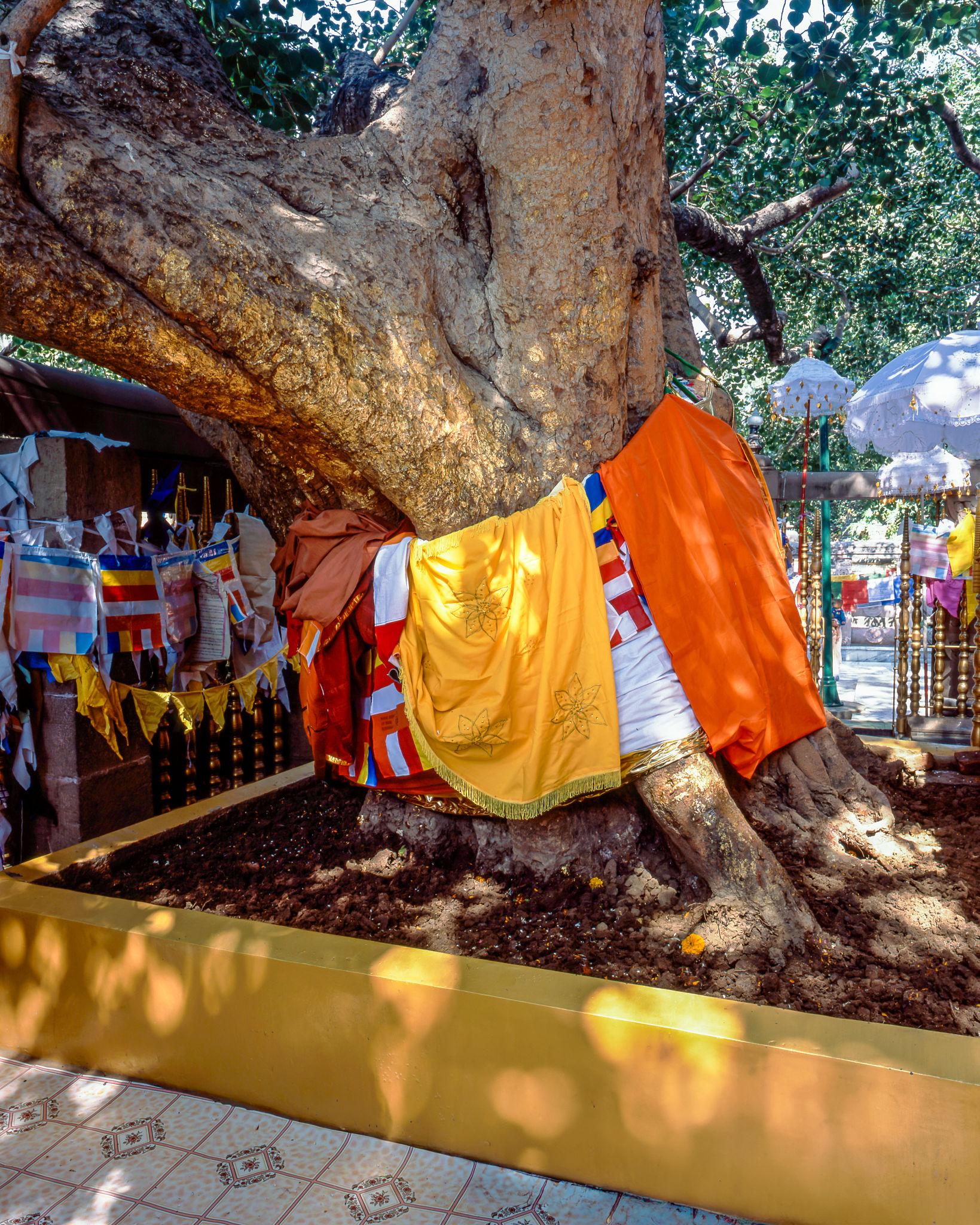
What Is the Bodhivriksha Tree?
The word “Bodhivriksha” joins two simple ideas. “Bodhi” means awakening or enlightenment, and “vṛksha” means tree. In common English usage, people usually say “Bodhi Tree.” Both expressions refer to the sacred tree associated with the moment Siddhartha Gautama became the Buddha.
This basic meaning matters because it answers the most direct question people have when they search for the Bodhivriksha Tree. It is not a random sacred tree or a general symbol chosen later. It is remembered because of the event linked with it: the Buddha's enlightenment at Bodh Gaya.
The Bodhivriksha Tree is sacred in Buddhism because it is tied to awakening. The respect shown to the tree comes from the event connected with it, not from a belief that the tree itself is a god or an object of blind worship. Buddhists honor it because it stands at the place where suffering, truth, discipline, and insight came together in a decisive way.
This is why the tree is associated with peace, meditation, patience, and transformation. It reminds people that the Buddha did not become awakened through force or miracle. He became awakened through understanding. The tree stays in Buddhist memory because it stood at the place where that understanding became complete.
The story of Buddha and the Bodhi Tree
The story of the Bodhivriksha Tree begins with Siddhartha Gautama in deep spiritual search. After leaving behind comfort and privilege, he practiced with determination and eventually came to the place now known as Bodh Gaya. There he sat beneath the tree in meditation with a resolve that has remained central in Buddhist memory ever since.
Siddhartha Gautama's meditation
Siddhartha sat in meditation under the tree after a long period of search, discipline, and reflection. His search was not casual. He had already tested other paths and found them incomplete. Sitting beneath the tree was not the beginning of effort. It was the point at which earlier effort became fully concentrated.
Enlightenment under the tree
Buddhist memory says that he resolved not to rise until he understood truth clearly. Under that tree he attained enlightenment and became the Buddha. This moment is one of the central turning points in Buddhism because it is where the path of suffering, its causes, its ending, and the way beyond it became fully known.
The tree as a witness to awakening
The Bodhivriksha Tree became part of Buddhist memory because it stood at the place of this transformation. In that sense, the tree is remembered as a witness to awakening. It marks the site where confusion ended and clear seeing began. That is why it remains one of the strongest living symbols in Buddhism.
Where the Bodhivriksha Tree is remembered today
The Bodhivriksha Tree is associated with Bodh Gaya, Bihar, India. The most important place connected with it today is the Mahabodhi Temple complex. The tree that visitors see there now is traditionally understood within the lineage of the ancient Bodhi Tree connected to the Buddha's enlightenment.
This is important because Bodh Gaya is not just a place-name in Buddhist history. It remains one of the holiest Buddhist pilgrimage sites in the world. People continue to visit because they want to come near the place where awakening happened and where the Bodhivriksha Tree keeps that memory alive.
The Bodhivriksha Tree cannot be understood apart from Bodh Gaya. The tree and the place belong together in Buddhist memory. Bodh Gaya is one of the holiest Buddhist places in the world because it holds the memory of the Buddha's awakening, and the tree is central to that memory. This is why pages such as Bodh Gaya and the wider directory of Buddhist and Ambedkarite places naturally connect here.
People can still visit the Bodhivriksha Tree area today. Pilgrims and visitors go to Bodh Gaya throughout the year to sit in quiet reflection, meditate, or pay respect. For some, it is a place of devotion. For others, it is a place of study and contemplation. In both cases, the site remains one of the most important Buddhist pilgrimage places in the world.
Bodhivriksha Tree in Buddhist tradition
The Bodhi Tree is remembered and honored across Buddhist communities in many ways. In pilgrimage, people travel to Bodh Gaya to sit, reflect, and meditate near the tree area. In Buddhist art, Bodhi leaves and tree imagery appear again and again because they point back to the Buddha's awakening. In daily devotion, many Buddhists sit near Bodhi trees, offer respect, or remember the tree during meditation and study.
The memory of the Bodhivriksha Tree also continued beyond Bodh Gaya. One of the best-known later Bodhi trees is the Jaya Sri Maha Bodhi in Sri Lanka, which is traditionally believed to have grown from a cutting of the original Bodhi tree associated with the Buddha's enlightenment in Bodh Gaya. That continuity matters because it shows how the memory of awakening was carried across regions and preserved in living form.
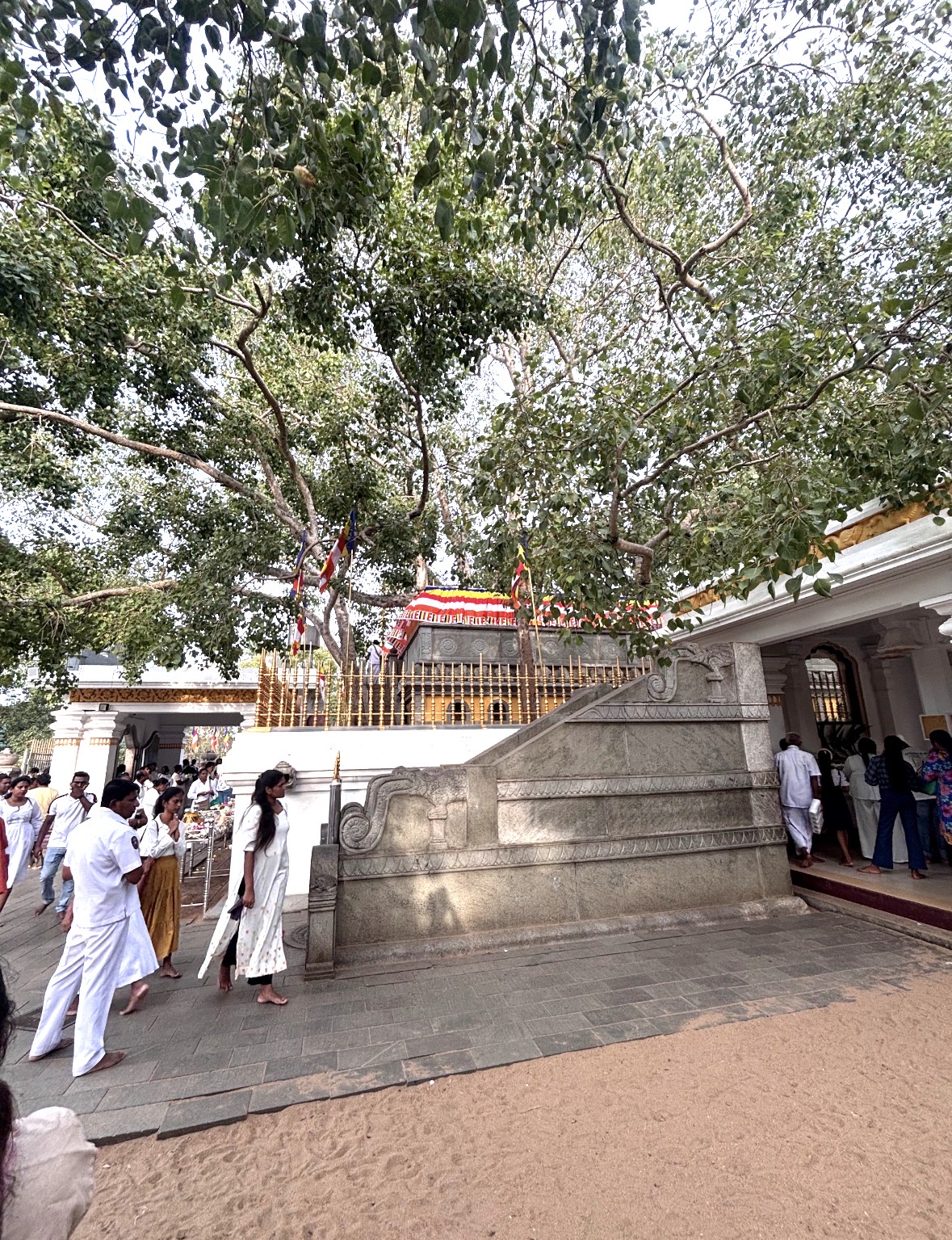
These practices show that the Bodhivriksha Tree remains active in Buddhist imagination. It is not only something from a distant past. It still shapes how people remember the Buddha and how they think about the path of awakening in their own lives.
The Bodhivriksha Tree carries several connected meanings in Buddhism. It represents awakening because it is tied to the Buddha's enlightenment. It represents wisdom because the event under the tree was a moment of clear understanding. It represents stability and patience because awakening came through steady discipline rather than restless movement. It represents liberation because the Buddha discovered a path beyond suffering there.
It also suggests inner transformation. A tree grows slowly and remains rooted. In a similar way, Buddhist practice is not usually sudden or careless. It asks for sustained effort, reflection, moral conduct, and understanding. That is one reason the Bodhivriksha Tree remains such a powerful symbol. It reminds people that wisdom grows through practice.
The tree, the leaf, and what they represent
Yes. The Bodhi Tree is traditionally identified with the Peepal Tree, whose botanical name is Ficus religiosa. What makes the Bodhivriksha sacred, however, is not only the species. What makes it sacred is its association with the Buddha's enlightenment. That distinction is important because it keeps the meaning clear. Not every Peepal Tree is the Bodhivriksha Tree in the historical and spiritual sense. The sacred meaning comes from the event and the memory attached to it.
The Bodhi leaf is one of the most recognizable Buddhist symbols. Its shape is widely used in art, temple design, decoration, devotional objects, and printed material. The leaf is remembered because it points back to the tree of awakening. It often represents wisdom, peace, and the Buddha's path.
For many people, the Bodhi leaf works as a small but immediate reminder of something larger. It brings the memory of Bodh Gaya, the Bodhivriksha Tree, and the Buddha's enlightenment into everyday sight.
The Bodhivriksha Tree teaches that truth is reached through patience. It teaches that silence and reflection have real value. It teaches that change begins within, not through empty display. It teaches that wisdom grows through practice, and that liberation from suffering depends on understanding rather than escape.
These lessons are part of why the tree remains so close to Buddhist life. It is not only sacred because of the past. It remains meaningful because it still teaches how awakening should be understood in the present.
Bodhivriksha Tree in Ambedkarite Buddhist understanding
For Ambedkarite Buddhists, the Bodhivriksha Tree can also be read as a symbol of knowledge, awakening from ignorance, and moral transformation. Ambedkar's turn to Buddhism was shaped by his insistence on reason, dignity, and ethical life. In that light, the tree can be understood not as an object of blind reverence, but as a symbol of the moment when truth was understood clearly and human life was redirected by wisdom.
This is one reason the Bodhivriksha Tree fits naturally with Ambedkarite reading. It points toward the same seriousness found in pages such as why Ambedkar chose Buddhism, The Buddha and His Dhamma, and Ambedkarite Buddhism. It supports a reading of Buddhism based on understanding, not confusion.
Related topics
If you want to continue from the Bodhivriksha Tree into the wider Buddhist world, go next to Bodh Gaya, then to What Is Buddhism?, and then to How to Practice Buddhism. If you want to connect the older Buddhist world with Ambedkar's later return to Dhamma, continue to Deekshabhoomi and Why Ambedkar Chose Buddhism.
Conclusion
The Bodhivriksha Tree stands as one of the strongest symbols in Buddhism because it remembers the moment Siddhartha Gautama became the Buddha. It points to wisdom, effort, compassion, and liberation from suffering. For many people, it remains a symbol of hope and awakening. For others, it is a reminder that truth is reached through patience and clear understanding. In both cases, the Bodhivriksha Tree continues to carry one of the deepest memories in the Buddhist world.