Overview
What were these satyagrahas about?
These satyagrahas were about rights that should never have been denied in the first place. One movement centered on access to public water. Others centered on temple entry and the refusal of caste society to treat Dalits as equal human beings in public and religious life. Behind each struggle stood the same larger question: could a society call itself civilized while keeping some of its people outside the ordinary rights of touch, entry, water, worship, and dignity?
Ambedkar used satyagraha not as empty symbolism, but as a disciplined way to expose injustice in public. He chose issues that made caste visible in daily life. That is why these movements still matter. They show that the struggle against caste was not abstract. It was tied to roads, tanks, temples, law, public space, and the right to stand as a full human being in society.
List of major satyagrahas
The list below brings together the best-known satyagrahas associated with Ambedkar's public struggle. Some centered on civic rights such as water access. Others centered on religious exclusion and temple entry. Read together, they show how the fight for equality moved across both civic and symbolic spaces.
_The_Ambedkarites.jpg)
Mahad Satyagraha (1927)
The Chavdar Tank movement asserted the right of Dalits to draw water from a public tank and made civic equality a public claim.
Year: 1927
Issue: Water rights
Place: Mahad, Maharashtra
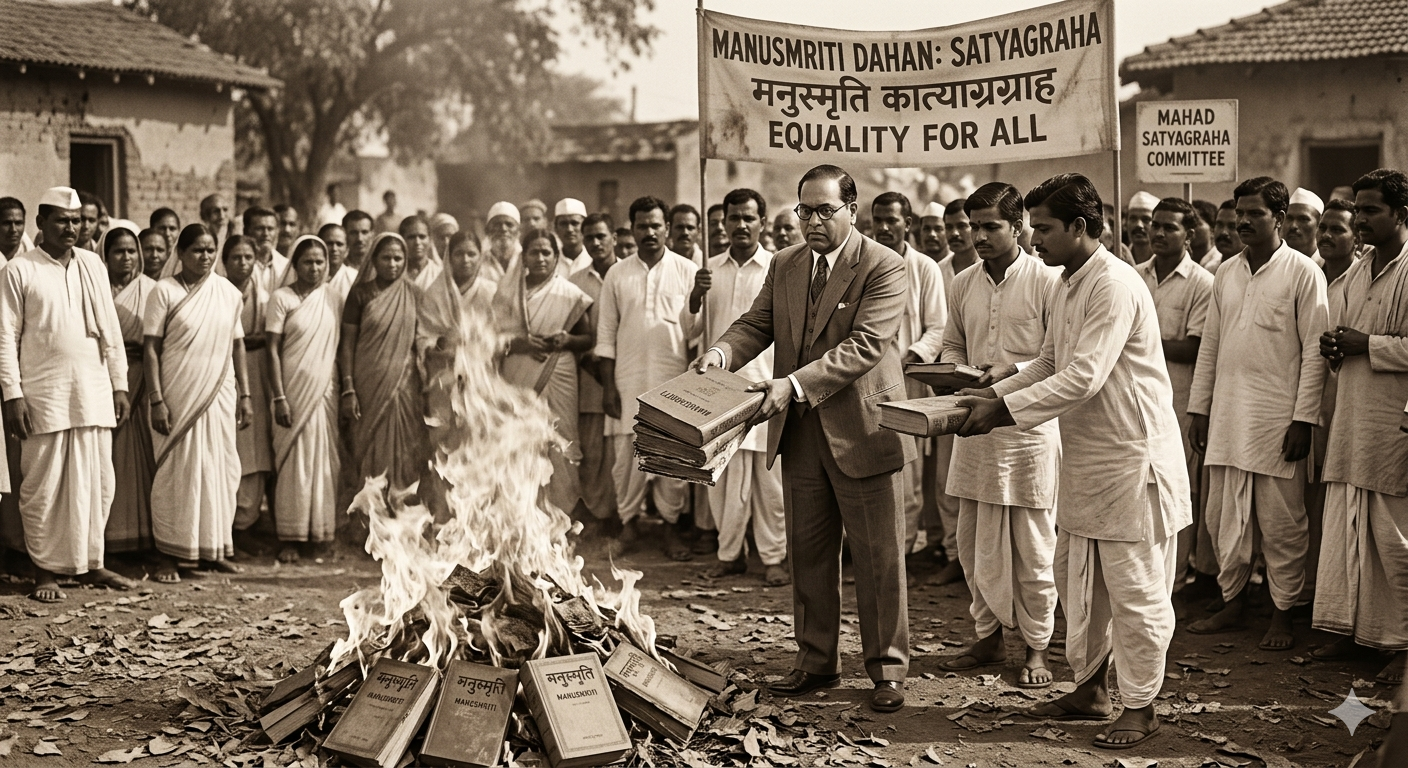
Manusmriti Dahan (1927)
The public burning of Manusmriti rejected the scriptural authority used to defend caste hierarchy and untouchability.
Year: 1927
Issue: Rejection of caste authority
Place: Mahad, Maharashtra
Kalaram Temple Satyagraha (1930)
This temple entry movement in Nashik challenged religious exclusion and asserted the right to equal public respect.
Year: 1930
Issue: Temple entry
Place: Nashik, Maharashtra
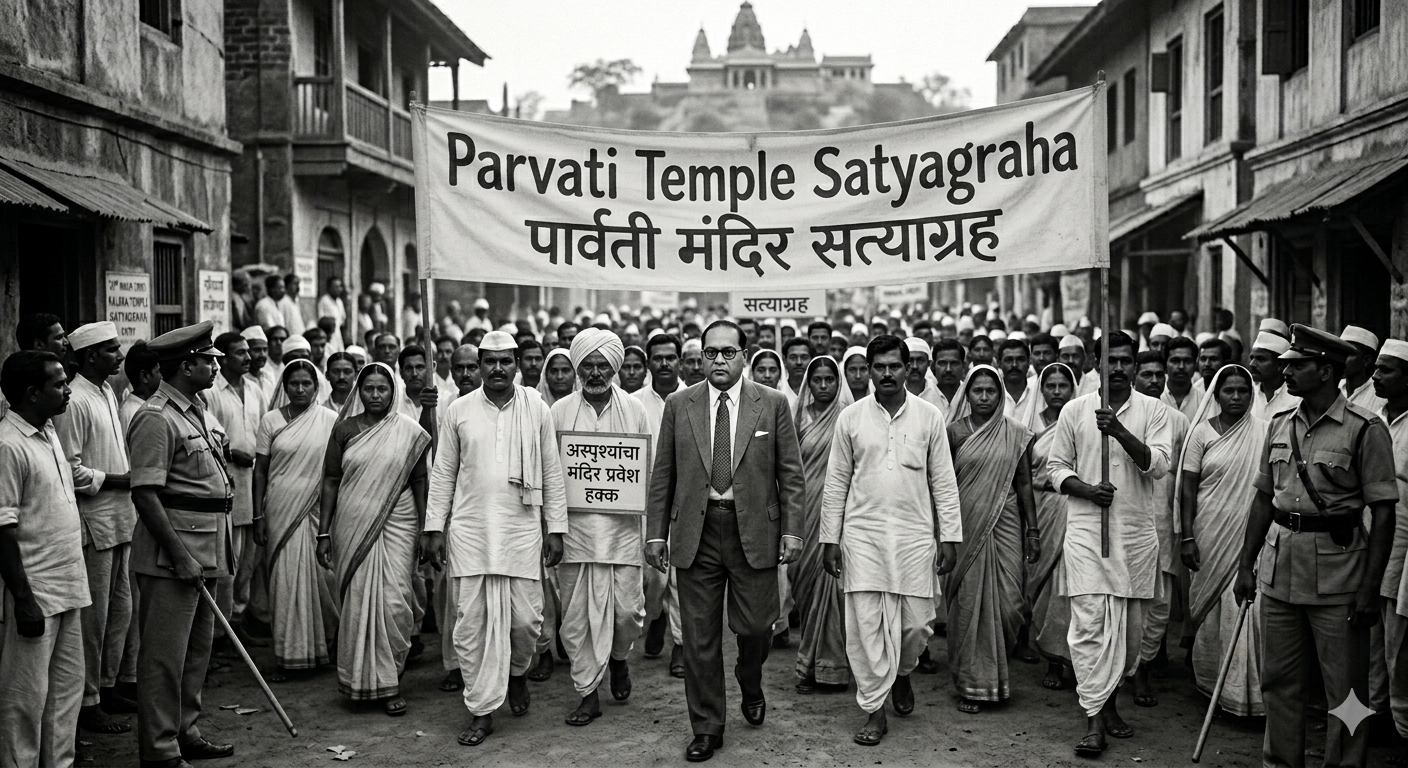
Parvati Temple Satyagraha (1929)
The Parvati movement in Pune brought temple entry and social equality into direct confrontation with caste orthodoxy.
Year: 1929
Issue: Temple entry
Place: Pune, Maharashtra
Why these movements matter today
These satyagrahas matter today because they still teach the difference between sympathy and equality. They remind readers that social justice is not proved by kind words alone. It is proved by whether a society allows equal access, equal dignity, and equal public standing. Ambedkar's satyagrahas continue to inspire because they joined discipline with courage and refused to treat humiliation as normal. They remain important to anyone trying to understand rights, self-respect, and the history of organized anti-caste resistance in India.
They also remain important because they show that rights had to be asserted where inequality was enforced most directly. Water, roads, temples, and public respect were not minor issues. They were the places where caste society announced who belonged and who did not. Ambedkar's movements answered that announcement in public.
How these satyagrahas changed the movement
Read in sequence, these satyagrahas show how Ambedkar's movement developed in public. Mahad made civic equality visible through the question of water. Manusmriti Dahan made clear that caste could not be opposed only in practice while leaving its intellectual authority untouched. The temple-entry movements at Parvati and Kalaram moved the struggle into religious space and exposed how deeply caste shaped public respect and moral status.
This sequence matters because it shows that Ambedkar was not choosing random sites of conflict. He was revealing caste where it operated most clearly. First the movement asserted the right to share common civic life. Then it challenged the social and scriptural authority behind exclusion. Then it confronted the religious spaces through which caste hierarchy tried to preserve itself as sacred order. That movement from civic rights to ideological challenge to temple entry gives the satyagrahas their larger historical force.
Contribute or suggest updates
The movement history of Dr. B.R. Ambedkar deserves careful documentation. If you notice a missing detail or want to share a verified correction, please reach out through our Contact Us page so the material can be reviewed responsibly.
FAQs
What were Ambedkar's main satyagrahas about?
Ambedkar's main satyagrahas were about water rights, temple entry, social equality, and the public dignity of oppressed communities.
Which satyagraha is most closely linked with water rights?
The Mahad Satyagraha of 1927 is most closely linked with water rights because it challenged the denial of Dalit access to the public Chavdar Tank.
Why is Manusmriti Dahan included with Ambedkar's satyagrahas?
Manusmriti Dahan is included because it was a major public rejection of the scriptural authority used to justify caste hierarchy and untouchability.
Why are temple-entry satyagrahas important in Ambedkar's movement?
Temple-entry satyagrahas are important because they exposed caste exclusion in religious space and turned worship, dignity, and public status into questions of equality.